Key takeaways
- Corfu has around 100,000 residents, a university, a general hospital and an international airport, so it functions as a real town all year.
- Most full-time residents live in or near Corfu Town or in larger villages such as Acharavi, Gouvia and the central hills.
- Winters are mild and green; Corfu is the greenest of the Greek islands, and from November to April life centres on Corfu Town and the larger villages.
- Non-EU residents can apply for a Financially Independent Person visa (from about €3,500 a month of passive income) or the Golden Visa (€800,000 in Corfu).
In this guide
People who move to Corfu usually fell for it on holiday. The ones who stay happily are those who visited in November and February too, and liked what they saw. This guide is about those months as much as the summer.
We’re a Corfu agency, so we’re biased towards the island. We want you to arrive knowing exactly what year-round life here looks like. Here’s what year-round life involves, from where to live to residency, healthcare and getting around.
Is Corfu a good place to live all year?
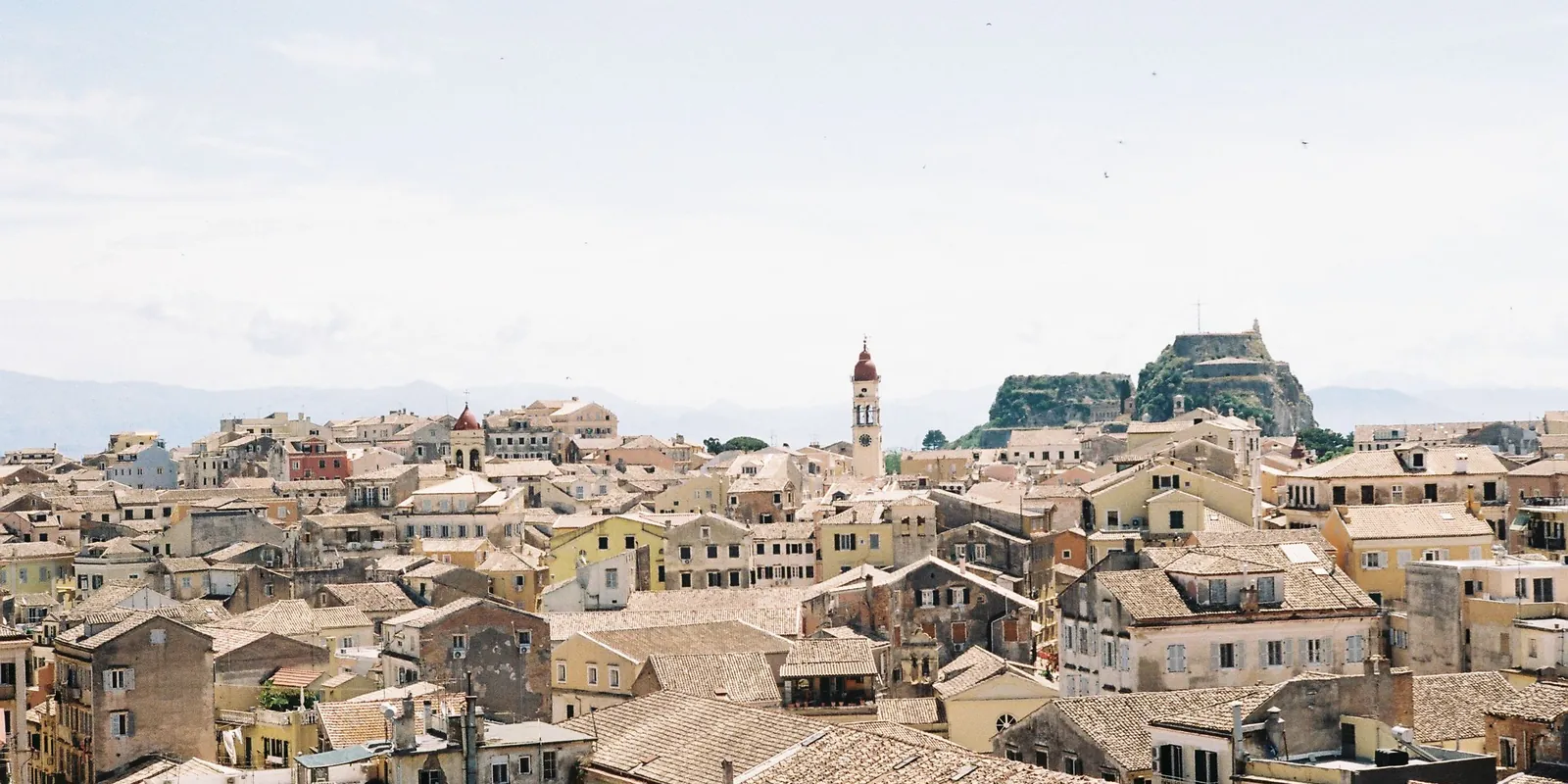
Corfu has around 100,000 residents, which makes it one of the larger Greek islands, and it works as a real community all year rather than just a resort. Corfu Town has a general hospital, the Ionian University, government offices, theatres and a year-round café culture, and the international airport is on the edge of town.
In winter the island settles into a calmer, local rhythm, and life gathers in the places that stay lively all year: Corfu Town and its suburbs, the central villages within 20 minutes of town, and larger villages such as Acharavi, Kassiopi and Lefkimmi.
Where do expats live in Corfu?
Most full-time foreign residents live within about 30 minutes of Corfu Town, and the choice usually comes down to how much you want to drive. The Old Town and the suburbs give you everything on foot or a short drive away; villages give you space, gardens and views, with town a scenic drive away.
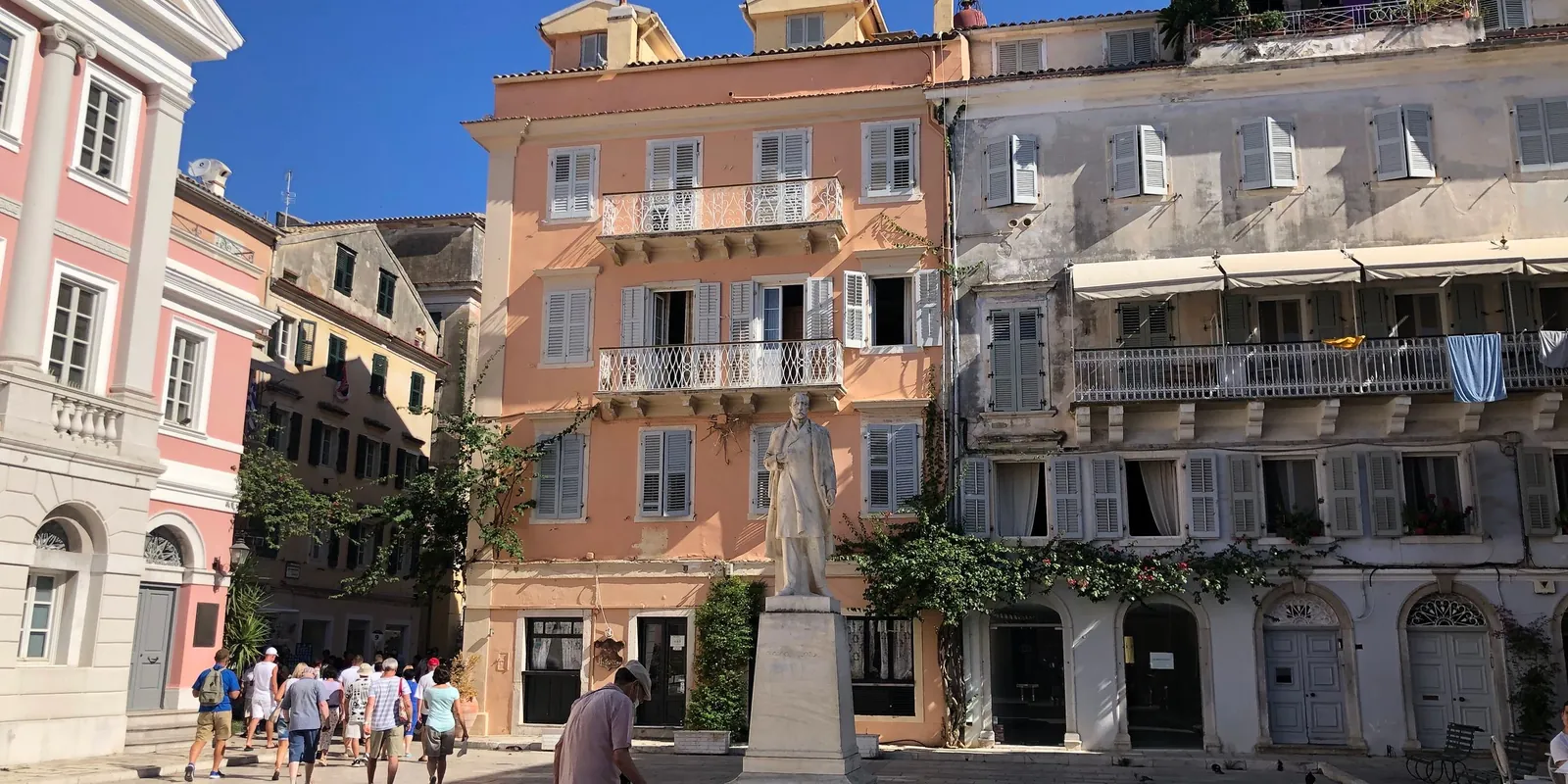
- Corfu Town and the Old Town: walkable, cultural, busy in summer. See our guide to buying in Corfu Old Town.
- Kanoni, Perama and Alepou: residential suburbs with views and quick access to the hospital and airport.
- Kontokali, Gouvia and Dassia: popular with boat owners and families, close to the marina, supermarkets and town.
- The central villages: places like Gastouri, Kato Korakiana and Agios Ioannis, with more space and a village community.
- The north: Acharavi and Roda have flat land, long beaches and a long-established foreign community, about an hour from town.
Here are three homes suited to year-round living, all within easy reach of Corfu Town:
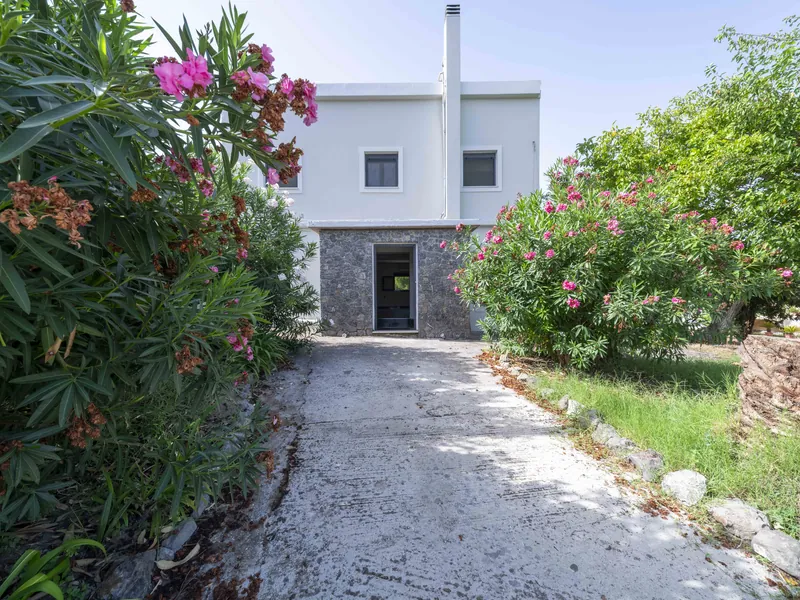 €599,000Elegant Family Residence in Triklino, Corfu3 bed · 280 m² · plot 1,124 m² · RR7405
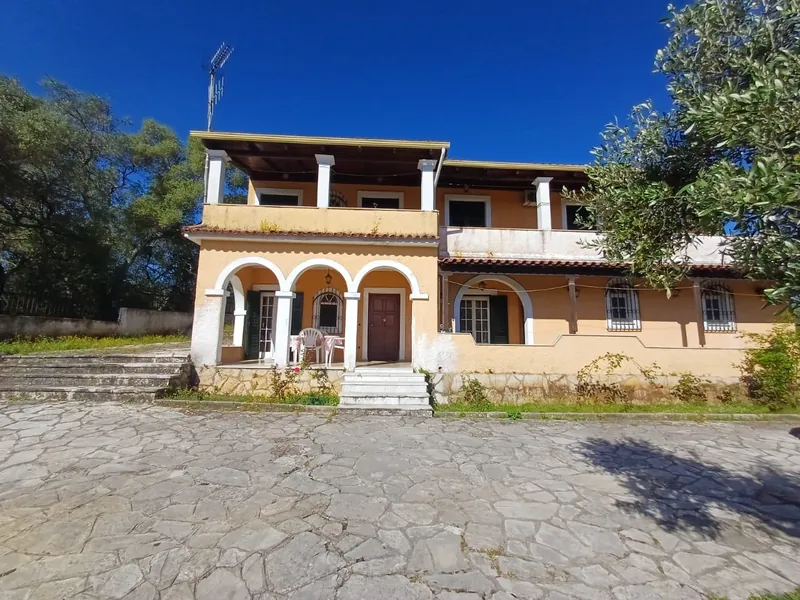 €420,000Two-Storey House in Sgombou Near Gouvia & Kontokali Corfu4 bed · 199 m² · plot 687 m² · RR7337
 €270,000Cosy House with Fireplace Close to Corfu Town2 bed · 116 m² · RR7483
What is winter really like in Corfu?
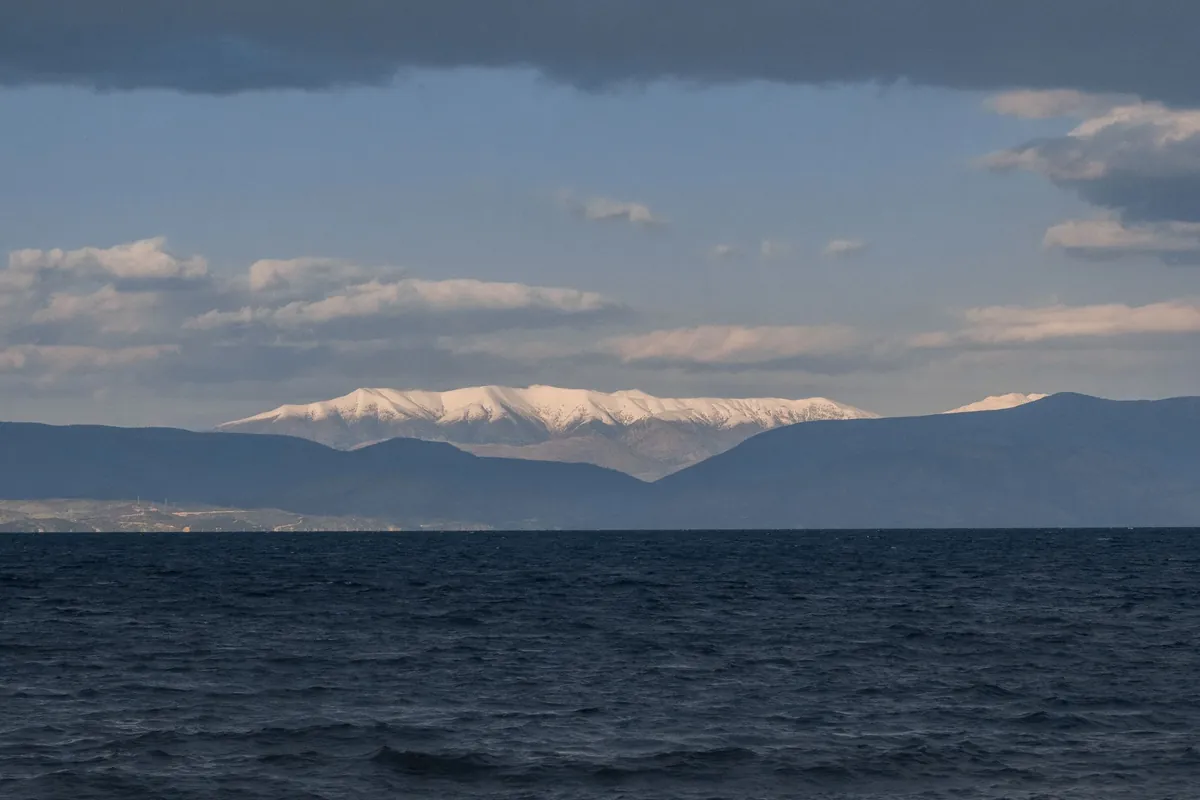
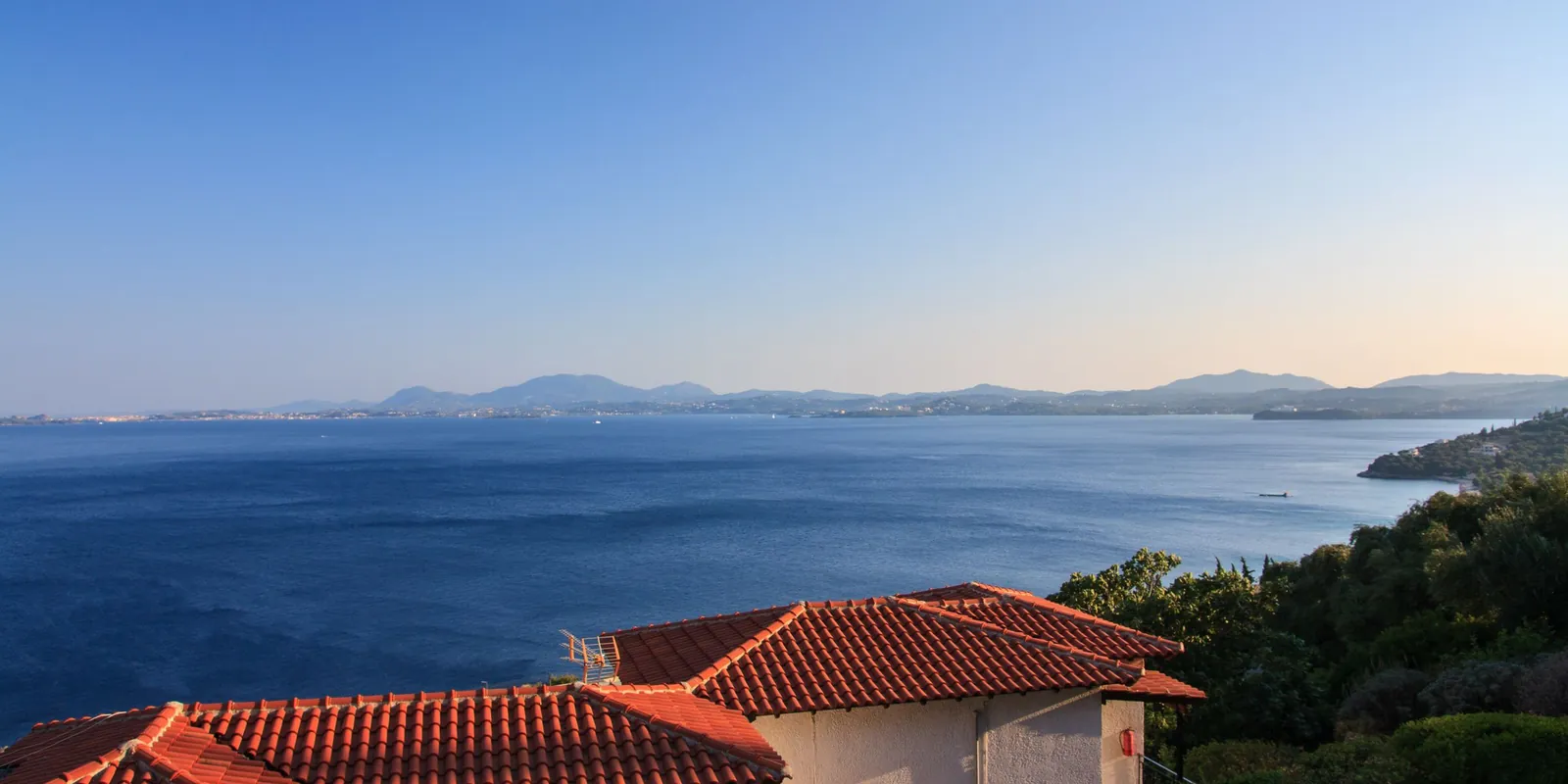
Corfu’s winters are mild by northern European standards, and the winter rain is what makes it the greenest island in Greece. Bright, clear days are common, and on many of them you can see snow on the mainland mountains across the water.
Practical points for winter living:
- Heating: island homes are typically warmed by heat pumps, fireplaces or wood stoves, and a fire on a winter evening is part of the charm. Our team can show you homes already set up for comfortable year-round living.
- Stone houses: their thick walls keep them cool in summer, and with good ventilation they are cosy all year.
- Social life: it centres on town and the lively villages. Many expats join choirs, walking groups, sports clubs or volunteer organisations.
Corfu also has quirks of its British past. Cricket is still played on the Spianada in the Old Town, and ginger beer (tsitsibira) is a local tradition.
How do you get to and from Corfu?

Corfu International Airport, on the edge of town, has direct flights to many European cities in summer, and easy connections via Athens all year round. Ferries link Corfu port with Igoumenitsa on the mainland, about 90 minutes away, and with Italy, which is useful if you prefer to drive from northern Europe.
On the island, a car gives you the most freedom, while in or near town much is within walking distance. Local blue buses serve Corfu Town and the suburbs, and green KTEL buses run to the villages.
What residency options are there?
EU citizens can live in Greece freely and should register their residence after three months. Non-EU citizens, including British citizens since Brexit, are limited to 90 days in any 180 in the Schengen area unless they hold a residence permit. The main routes for property buyers are:
| Route | Who it suits | Key requirement (2026) |
|---|---|---|
| Financially Independent Person (FIP) | Retirees and people with passive income | About €3,500 a month for the main applicant; no work in Greece |
| Digital Nomad visa | Remote workers employed or self-employed abroad | About €3,500 a month from remote work; apply at a consulate |
| Golden Visa | Buyers investing in property | €800,000 purchase in Corfu (€400,000 on Paxos); single property of 120 m²+ |
Requirements are updated from time to time, so your lawyer will confirm the current details for your situation. British buyers will find more on this in our article on buying property in Corfu after Brexit, and our Golden Visa guide covers the investment route.
What about healthcare, schools and taxes?
Corfu’s General Hospital in Corfu Town is the island’s main public hospital, supported by health centres in larger villages and a number of private clinics and doctors. EU residents can use the public system once registered; many expats also take out private health insurance, which non-EU residence permits usually require.
Schools are mainly Greek state schools, and children who arrive young usually adapt quickly. Families looking for an international curriculum can explore the options on the island, and our team is happy to point you in the right direction.
On tax, Greece offers a special regime for foreign pensioners who move their tax residence here: a flat 7% on foreign income for up to 15 years, subject to conditions. Our article on the 7% flat tax for retirees explains who qualifies. Ownership costs are covered in our guide to the cost of owning a home in Corfu.
Five questions to ask yourself before moving
- Have you spent at least a week here between November and March?
- How far will you be from the hospital, a supermarket and a pharmacy?
- Will your home be warm and dry in winter, and how is it heated?
- Which residency route applies to you, and what does it require?
- Will you work, volunteer or join clubs, and how will you build a social life outside summer?
If you can answer those with confidence, Corfu is one of the most rewarding places in the Mediterranean to make a home. Our area guide will help you choose where.
Frequently asked questions
Is Corfu a good place to live all year round?
For many people, yes. Corfu has around 100,000 residents, a general hospital, a university and an international airport, so services run all year. Winters are mild and green, and most full-time residents live in or near Corfu Town or in larger villages, where life carries on all year.
What is winter like in Corfu?
Winters are mild compared with northern Europe, and the winter rain keeps Corfu the greenest Greek island. Snow is rare at sea level but often crowns the mountains across the water, and Corfu Town stays lively all season.
How can a non-EU citizen live in Corfu?
The main routes are the Financially Independent Person visa, which requires roughly €3,500 a month of passive income for the main applicant, the Digital Nomad visa for remote workers, and the Golden Visa, which requires an €800,000 property purchase in Corfu. Your lawyer will confirm the current requirements.
Do I need a car to live in Corfu?
Outside Corfu Town, a car gives you the most freedom to enjoy the island’s villages and coast. In the Old Town and nearby suburbs, many residents walk, use local buses and taxis, and keep a small car for trips around the island.
Are there tax benefits for retirees moving to Corfu?
Greece offers a special regime for foreign pensioners who become Greek tax residents: a flat 7% tax on foreign income for up to 15 years, subject to conditions. Whether it suits you depends on your home country’s tax treaty, so take advice from a Greek tax adviser before moving.

Founded in 2003 by Roula Rouva, our company brings more than 23 years of experience in the Greek real estate market, specializing in premium and ultra-premium residential properties, investment opportunities, hospitality assets, and development projects. As the exclusive representative of Forbes Global Properties in Greece, we combine deep local expertise with international reach. With offices in Athens, Corfu (Corfu Town, Dafni, and Arillas), and Paxos (Lakka), our professional ecosystem includes a core team of 50 specialized professionals, a network of 80+ lawyers, more than 50 certified translators, and trusted legal and tax partners. Our approach goes beyond transactions, focusing on lifestyle, personalized service, and long-term value.
Sources
- UNESCO World Heritage Centre, Old Town of Corfu, retrieved 2026-10-15
- Wikipedia, Corfu (geography, climate and population), retrieved 2026-10-15
- Naftemporiki, Greece raises Golden Visa investment sum (22 March 2024), retrieved 2026-10-21
The information provided in this article is for general informational purposes only and does not constitute legal, tax, financial, or investment advice. For advice tailored to your specific circumstances and further clarification, please contact our team or consult the relevant qualified professional.