Key takeaways
- UK citizens can still buy property in Corfu freely, with no special permit needed for the island.
- Without a residence permit, UK visitors can stay 90 days in any 180 in the Schengen area; a residence permit allows longer stays.
- Greece plans to raise transfer tax for non-EU buyers, including UK citizens, from 3.09% to 15.45% from 1 July 2027; purchases completed earlier are expected to stay at today’s rate.
- Buying follows six simple steps, with your lawyer, the notary and our team looking after the formalities; extra costs total around 9–10% of the price.
In this guide
- Can UK citizens still buy property in Corfu?
- How long can you stay in your Corfu home?
- What residency options do UK buyers have?
- How will the 2027 transfer tax change affect UK buyers?
- How does the buying process work for UK buyers?
- What does buying cost on top of the price?
- What else do UK owners plan for?
- Frequently asked questions
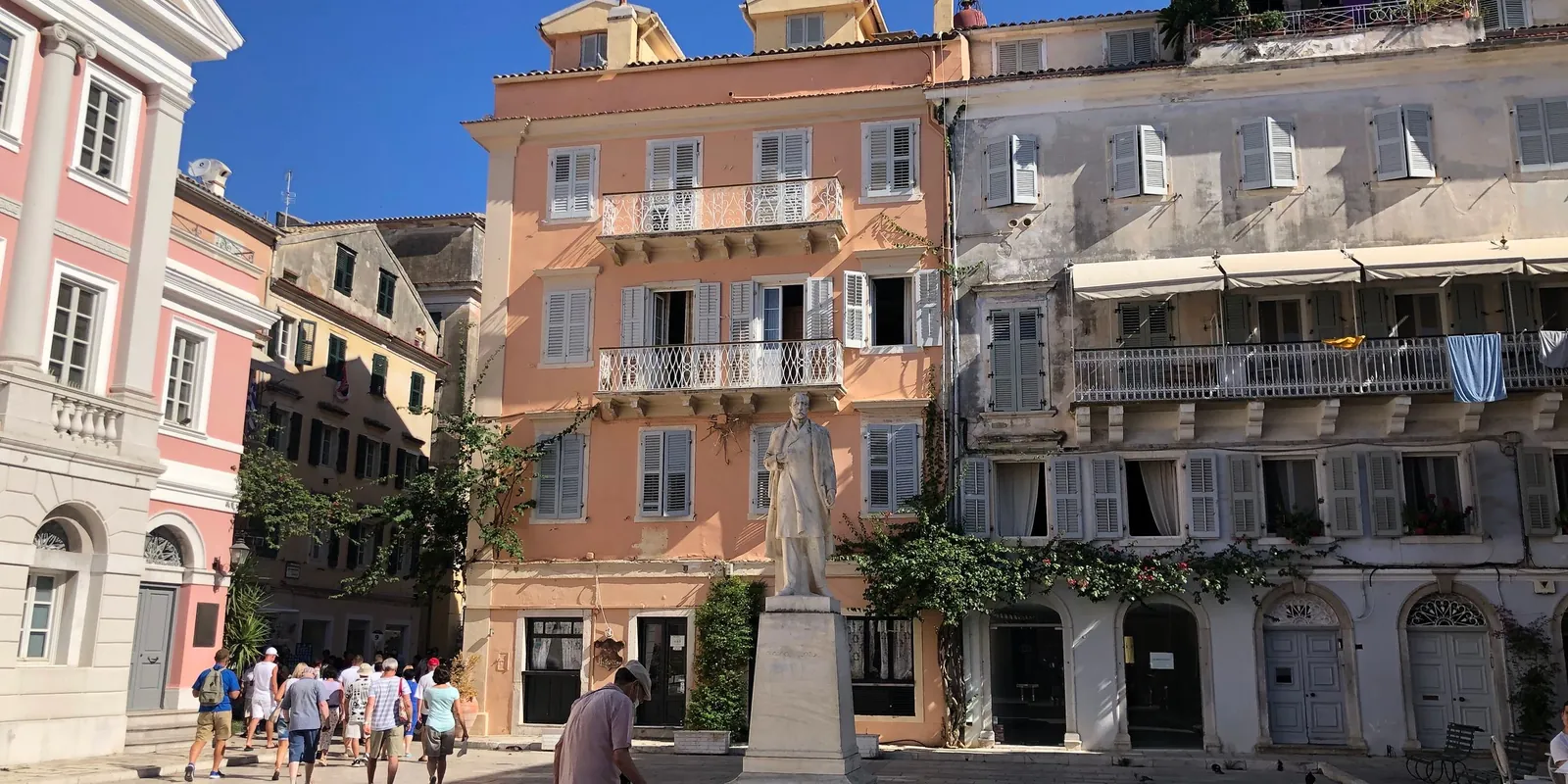
Corfu’s links with Britain run deep. The island was a British protectorate from 1815 to 1864, cricket is still played on the Spianada, and the Durrell family made it famous to generations of British readers. Today, British owners live all over the island, from Kassiopi to Agios Georgios, and many more spend their spring and autumn here every year.
Since Brexit, UK citizens buy as non-EU nationals. That sounds more complicated than it is. This guide gives a general overview of what it means in practice: your right to buy, how long you can stay, the residence options, the planned tax change in 2027 and how a purchase works. Your lawyer will advise on the details of your own situation.
Can UK citizens still buy property in Corfu?
Yes. UK citizens can buy homes, villas and land in Corfu just as before, and no special permit is needed to buy on the island. You’ll need a Greek tax number (AFM) and a Greek bank account, and your lawyer and our team help you set up both.
What changed with Brexit isn’t ownership; it’s how long you can stay without a residence permit and, potentially, the tax paid on purchase from July 2027. Both are easy to plan for once you know how they work, and many British owners already enjoy their Corfu homes under these rules.
How long can you stay in your Corfu home?
Without a Greek residence permit, UK citizens can stay in the Schengen area, including Greece, for up to 90 days in any rolling 180-day period. Since 10 April 2026, the EU’s Entry/Exit System (EES) has been fully operational, recording entries and exits digitally at the border instead of with passport stamps.
A separate travel authorisation, ETIAS, is planned for visa-exempt visitors including UK citizens, with a fee reported at €20. At the time of writing it hadn’t started. The official EU travel website always has the current position.
Planning your 90 days
Many UK owners split their time: spring and autumn in Corfu, when the island is green, warm and quieter, with summers kept for family visits. The 90 days count across all Schengen countries, so a skiing trip to Austria or a weekend in Paris uses the same allowance. A simple calendar makes it easy to get the most out of every stay.
What residency options do UK buyers have?
If you’d like to spend more than 90 days in 180 in Corfu, a residence permit lets you do so. In 2026, the main routes for UK buyers are the Financially Independent Person permit, the Digital Nomad visa for remote workers and the Golden Visa for property investors, which in Corfu starts at €800,000.
- Financially Independent Person (FIP): suits retirees and people living on pensions, rents or investments, with a stable income from outside Greece.
- Digital Nomad visa: for people employed by, or working for clients, outside Greece.
- Golden Visa: residence through property investment. In Corfu the threshold is €800,000; on Paxos it’s €400,000.
Each route has its own requirements, and a lawyer or immigration adviser will confirm the current ones for you. UK retirees who move their tax residence to Greece may also be interested in the 7% flat tax on foreign income. Our articles on the 7% regime and the Golden Visa explain both, and our guide to living in Corfu all year covers daily life.

How will the 2027 transfer tax change affect UK buyers?
Greece has announced plans to raise the property transfer tax for non-EU buyers from 3% to 15%, plus the 3% municipal surcharge on the tax, so from 3.09% to 15.45% in total, from 1 July 2027. UK citizens would be included. On a €500,000 resale home, that would mean about €77,250 in transfer tax instead of €15,450.
Transfer tax on a €500,000 resale home in Corfu
Current rate vs the proposed rate for non-EU buyers from 1 July 2027
The proposal wasn’t yet law at the time of writing, and the details, including any exemptions, could change. Our article on the 15% transfer tax tracks what’s been announced. For UK buyers already thinking about Corfu, the practical message is a positive one: purchases completed before July 2027 are expected to stay at today’s rate, and a Greek purchase from shortlist to contract usually takes a few months, so starting your search now leaves plenty of time.
How does the buying process work for UK buyers?
The process for UK buyers is the same as for any other buyer, and much of it can be done from the UK. Many British buyers view properties by video first, then fly out for a few days of viewings once they have a shortlist. In general terms, a purchase follows six steps:
| Step | What happens |
|---|---|
| 1. Research | You explore areas and the types of property that suit you. |
| 2. Viewings | You visit the homes on your shortlist, in person or by video. |
| 3. Offer | You make an offer and we help both sides agree the price and main terms. |
| 4. Proposal and pre-contract | The agreed terms are set out, with your lawyer advising you. |
| 5. Formalities | Tax number, bank account, purchase agreement and payment. |
| 6. Closing | The contract is signed before a notary and ownership is registered. |
Your lawyer and the notary take care of the legal side, and our team coordinates everyone involved and keeps you updated at every stage. Our step-by-step buyer’s guide explains each stage. If you can’t be in Greece for the signing, you can give a power of attorney to a lawyer, who signs on your behalf; our guide to buying property in Greece remotely explains how buyers abroad usually do this.
Plan the pound-to-euro transfer early, too: many buyers use a currency specialist so they know exactly what their budget is in euros.
What does buying cost on top of the price?
As a general guide, buyers in Greece should plan for additional costs of around 9–10% of the purchase price in total. The main items are:
- Transfer tax: up to 3.09% of the price at today’s rate;
- Land registry fees: 0.5% plus VAT;
- Professional fees: the agent, the notary and your lawyer.
Your lawyer will give you an exact figure for your purchase before you commit.
Here are three homes popular with UK buyers, in the north and north-west where many British owners already live:
 €900,000Stone Villa with Sunset Views for Sale in Peroulades, Corfu3 bed · 155 m² · plot 2,233 m² · RR7279
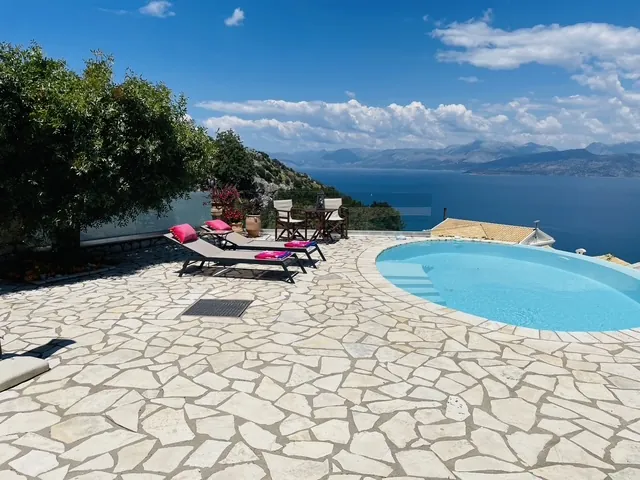 €379,000Sea View Villa with Pool in Loutses, North Corfu2 bed · 80 m² · plot 1,085 m² · RR7360
 €319,950Charming 3-Bedroom Villa with Pool in Sidari Corfu3 bed · 123 m² · plot 605 m² · RR7321
What else do UK owners plan for?
- Healthcare: the UK Global Health Insurance Card (GHIC) covers necessary treatment during temporary stays. Residents use Greek public cover or private insurance.
- Driving: a UK licence is fine for visitors; residents can check the current exchange rules.
- Renting your home: many owners rent their home for part of the summer, where this is permitted. An accountant in Greece will advise on registering and declaring the income.
- Family planning: your lawyer can advise on how your Corfu home fits into your will and your family’s plans.
- Looking after the house: local property managers, gardeners and pool technicians keep your home ready for your arrival. Our guide to owning a holiday home in Corfu explains how owners organise it.
Corfu remains one of the easiest places in Greece for UK owners: direct summer flights from many UK airports, English widely spoken, a long season and a large, welcoming British community. With a little planning, owning a home here after Brexit is as rewarding as ever.
Frequently asked questions
Can British citizens still buy property in Corfu after Brexit?
Yes. UK citizens can buy homes, villas and land in Corfu as before, and no special permit is needed to buy on the island. You’ll need a Greek tax number (AFM) and a Greek bank account, which your lawyer and our team help you arrange.
How long can I stay in my Corfu home as a UK citizen?
Without a Greek residence permit, UK citizens can spend up to 90 days in any 180-day period in the Schengen area, including Greece. Owners who want to stay longer can apply for a residence permit, such as the Financially Independent Person permit or the Golden Visa.
Will UK buyers pay the new 15% transfer tax?
If the proposal becomes law as announced, non-EU buyers, including UK citizens, would pay a transfer tax of 15.45% in total instead of 3.09% from 1 July 2027. On a €500,000 resale home, that’s about €77,250 instead of €15,450. Purchases completed before then are expected to stay at today’s rate.
Which visa lets a UK citizen live in Corfu?
The most common routes are the Financially Independent Person permit for people with a stable income from outside Greece, the Digital Nomad visa for remote workers, and the Golden Visa for property investors, which starts at €800,000 in Corfu. A lawyer will confirm the current requirements.
Can I buy a Corfu property without travelling to Greece?
Yes. Many UK buyers view properties by video and give a power of attorney to a lawyer, who signs on their behalf. Our team coordinates the purchase and keeps you updated at every stage.

Founded in 2003 by Roula Rouva, our company brings more than 23 years of experience in the Greek real estate market, specializing in premium and ultra-premium residential properties, investment opportunities, hospitality assets, and development projects. As the exclusive representative of Forbes Global Properties in Greece, we combine deep local expertise with international reach. With offices in Athens, Corfu (Corfu Town, Dafni, and Arillas), and Paxos (Lakka), our professional ecosystem includes a core team of 50 specialized professionals, a network of 80+ lawyers, more than 50 certified translators, and trusted legal and tax partners. Our approach goes beyond transactions, focusing on lifestyle, personalized service, and long-term value.
Sources
- Roula Rouva | Forbes Global Properties, Greece's 15% property transfer tax for non-EU buyers: what changes on 1 July 2027, 30 September 2026
- European Union, Entry/Exit System (EES) and ETIAS: official travel information, retrieved 2026-10-22
- Government of Poland (consular notice), Entry/Exit System (EES) fully operational from 10 April 2026, retrieved 2026-10-15
The information provided in this article is for general informational purposes only and does not constitute legal, tax, financial, or investment advice. For advice tailored to your specific circumstances and further clarification, please contact our team or consult the relevant qualified professional.